

Bhagavad Gita 2.5 (BG 2.5) | Sāṅkhya-yoga: Yoga of Contemplation on Self
गुरूनहत्वा हि महानुभावान्
श्रेयो भोक्तुं भैक्ष्यमपीह लोके ।
हत्वार्थकामांस्तु गुरूनिहैव
भुञ्जीय भोगान् रुधिरप्रदिग्धान् ॥
gurūn-ahatvā hi mahānubhāvān
śreyo bhoktuṃ bhaikṣyam-apīha loke
hatvārthakāmāṃs-tu gurūn-ihaiva
bhuñjīya bhogān rudhira-pradigdhān – 2.5
Instead of killing these high-souled Teachers, it is better to live here on alms. After killing the Teachers, whatever we enjoy in this world will be stained by their blood. We will also have abandoned dharma and moksha of the fourfold purusharthas, clinging only to artha and kama.
BG 2.5: Commentary by Swami Bhoomananda Tirtha
Mahabharata war was unprecedented, no doubt. But even more so was what took place just before the arrows were discharged.
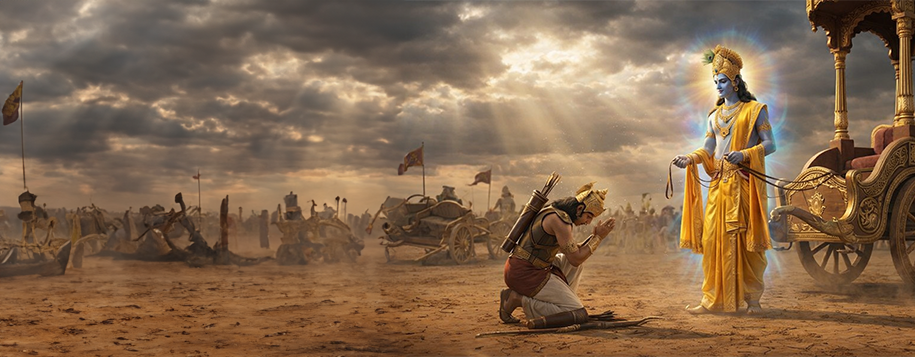
Arjuna, proficient with rare archery skills, was the one from whom exemplary fighting excellence was expected. He was the one to determine the fate of the whole encounter. But lo, how he sits now!
He was smitten hard by sympathy. His eyes were full of tears, and mind agitated to the core. What a stunning contrast! In a place meant to display and witness the best of fighting skill, adventure and excellence, the illustrious fighter Arjuna sits aggrieved and agitated. Who but Krishna is there to see the plight and address the victim! Krishna began to speak.51
Here is the grand beginning of Bhagavad Gita, the exemplary war dialogue. How well Krishna uses the war language and diction to address Arjuna’s plight!
Krishna pinpoints the irrelevance of Arjuna’s derogatory stand, calling it sheer unmanliness, inconsistent with where he is and what he has come there for!
With war cries raised and conches blown from both sides of the army, every fighter will be bubbling with war fervour to twang his bow and send arrows at the opponents fiercely. On such a momentous occasion, how could a war hero be given to this kind of imbecile reluctance? Warfield is for fighting alone, not for sympathy. None can honour, permit or condone Arjuna displaying mental adversity like this, says Krishna.
Select Chapter and Verse